How AI Is Helping Small Businesses, Startups and Enterprises Work Smarter
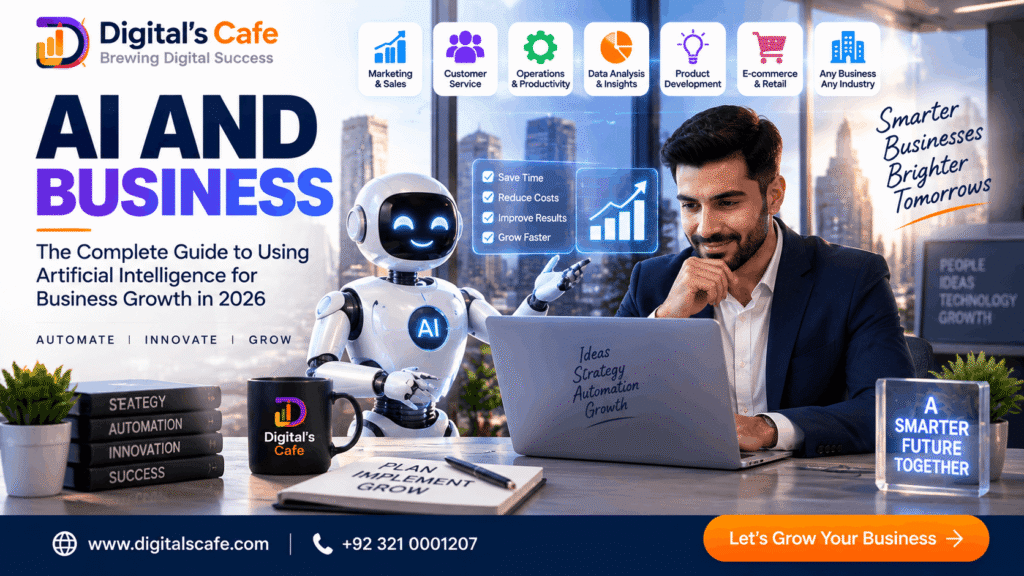
Artificial Intelligence (AI) is no longer a technology limited to large companies with huge budgets.
Today, businesses of every size are using AI to improve productivity, reduce operational costs, understand customers better and make faster decisions. in this blog you learn AI for Business Growth
A local restaurant can use AI to predict customer demand.
An e-commerce store can use AI to recommend products.
A marketing agency can use AI to analyze competitors and create better campaigns.
A construction company can use AI to prepare estimates and manage projects.
A healthcare business can use AI to organize patient information.
A service-based company can use AI chatbots to handle customer questions.
The biggest change is not that AI replaces businesses.
The biggest change is that businesses using AI can operate faster and smarter than businesses that ignore it.
According to current business trends, AI adoption is moving from experimentation into daily operations, with companies using AI for automation, customer service, marketing, analytics and decision-making.
For modern businesses, the question is no longer:
“Should we use AI?”
The better question is:
“Where can AI create the most value in our business?”
What Is AI in Business?
Artificial Intelligence refers to technology that allows machines and software systems to perform tasks that normally require human intelligence.
These tasks include:
- Understanding language
- Learning from data
- Recognizing patterns
- Making predictions
- Creating content
- Automating processes
- Supporting decisions
In business, AI acts as an intelligent assistant that helps teams complete work faster and make better decisions.
Examples:
A salesperson uses AI to identify potential customers.
A marketer uses AI to analyze customer behavior.
A manager uses AI dashboards to understand performance.
A customer support team uses AI chatbots to answer common questions.
Why Businesses Need AI in 2027
Business competition is increasing.
Customers expect:
- Faster responses
- Personalized experiences
- Better service
- Competitive prices
- Instant information
Traditional methods often require more:
- Employees
- Time
- Manual work
- Operational costs
AI helps businesses achieve more with existing resources.
How AI Helps Businesses
1. AI for Customer Service
Customer expectations have changed.
People want answers immediately.
AI-powered customer service helps businesses provide 24/7 support.
AI can:
- Answer frequently asked questions
- Provide product information
- Handle appointment bookings
- Track customer requests
- Support WhatsApp communication
- Route complex issues to human teams
Example:
A restaurant chatbot can answer:
“What are your opening hours?”
“Do you offer delivery?”
“Can I reserve a table?”
A real estate company chatbot can answer:
“Which properties are available?”
“What is the payment plan?”
2. AI for Marketing
Marketing is one of the biggest areas where AI creates value.
AI helps businesses:
- Research competitors
- Understand audiences
- Create content ideas
- Analyze campaigns
- Improve advertisements
- Predict customer behavior
A marketer can use AI to answer:
- What content should we create?
- Which audience should we target?
- Which competitors are performing well?
- What keywords should we target?
- Why are customers leaving?
AI Prompts for Marketing Research
Instead of asking:
“Give me marketing ideas”
Use detailed prompts.
Example:
Competitor Research Prompt
Act as a senior market research analyst.
Analyze my competitors in the [industry].
Identify:
- Their main services
- Their target audience
- Their marketing channels
- Their strengths
- Their weaknesses
- Content strategy
- Advertising approach
Provide actionable recommendations for my business.
SEO Research Prompt
Act as an SEO expert with 10 years experience.
Analyze this keyword: [keyword]
Provide:
- Search intent
- Related keywords
- Content gaps
- Competitor analysis
- Suggested article structure
- FAQs users search
- Internal linking opportunities
3. AI for Sales
Sales teams spend a lot of time on repetitive activities.
AI can help with:
- Lead qualification
- Customer segmentation
- Email writing
- Follow-up reminders
- Sales forecasting
- Customer analysis
Example:
Instead of manually checking hundreds of leads:
AI can identify:
- Which leads are most valuable
- Which customers are ready to buy
- Which prospects need follow-up
4. AI for Business Research
Research is one of the strongest AI applications.
Businesses can use AI to analyze:
- Markets
- Competitors
- Customers
- Trends
- Reviews
- Industry changes
Example:
A restaurant planning a new branch can ask AI:
Analyze the restaurant market in [Location].
Identify:
- Popular cuisines
- Customer preferences
- Competitors
- Pricing trends
- Marketing opportunities
- Potential risks
5. AI for Content Creation
AI helps businesses create:
- Blog outlines
- Social media posts
- Product descriptions
- Email campaigns
- Video scripts
- Ad copy
However, successful businesses do not use AI to create generic content.
They use AI as an assistant.
Human expertise + AI assistance creates better results.
6. AI for Data Analysis
Businesses collect huge amounts of data:
- Sales data
- Customer data
- Website traffic
- Advertising results
- Reviews
AI can analyze this information and identify:
- Trends
- Opportunities
- Problems
- Customer patterns
Example:
An e-commerce company can discover:
“Customers who buy product A usually buy product B.”
Then create better recommendations.
AI Applications by Business Type
1. Retail Businesses
Examples:
- Clothing stores
- Electronics shops
- Supermarkets
AI can help with:
Customer Experience
- Product recommendations
- Chat support
- Personalized offers
Operations
- Inventory prediction
- Demand forecasting
- Price optimization
Marketing
- Customer segmentation
- Campaign optimization
2. Restaurants and Food Businesses
AI can help restaurants with:
Customer Service
- Online reservations
- WhatsApp ordering
- Customer questions
Marketing
- Social media ideas
- Food photography enhancement
- Campaign planning
Operations
- Predict busy hours
- Manage inventory
- Reduce food waste
Example prompt:
Analyze my restaurant business.
Create:
- Customer persona
- Marketing strategy
- Social media calendar
- Promotion ideas
- Customer retention plan
3. E-Commerce Businesses
AI can improve:
Product Discovery
Recommend products based on customer behavior.
Customer Support
Answer questions automatically.
Marketing
Create:
- Product descriptions
- Email campaigns
- Advertising ideas
Analytics
Predict:
- Best-selling products
- Customer trends
- Purchase behavior
4. Marketing Agencies
AI helps agencies:
- Research faster
- Create strategies
- Analyze competitors
- Generate reports
- Improve campaigns
Examples:
SEO:
- Keyword research
- Content planning
- Technical analysis
Social Media:
- Content calendars
- Caption ideas
- Audience research
Ads:
- Creative testing
- Audience analysis
- Campaign optimization
5. Real Estate Businesses
AI can help:
- Answer property questions
- Recommend properties
- Generate descriptions
- Analyze market trends
- Qualify buyers
Example:
A chatbot can ask:
“Are you looking to buy or rent?”
“What is your budget?”
“Which location do you prefer?”
6. Healthcare Businesses
AI can support:
- Appointment management
- Patient communication
- Documentation
- Data organization
AI should support healthcare professionals, not replace professional medical decisions.
7. Construction Businesses
AI applications:
- Cost estimation
- Project planning
- Material forecasting
- Documentation
- Client communication
Example:
A construction company can use AI to analyze project requirements and prepare initial estimates.
8. Education Businesses
AI helps:
- Create learning materials
- Personalize education
- Automate administration
- Support students
Examples:
- AI tutors
- Automated assessments
- Learning recommendations
9. Service Businesses
Examples:
- Cleaning companies
- Repair services
- Consulting businesses
AI helps with:
- Lead management
- Appointment scheduling
- Customer communication
- Marketing automation
AI Tools Businesses Can Use
Content & Research
- ChatGPT
- Claude
- Gemini
- Perplexity
Design
- Canva AI
- Adobe AI tools
Marketing
- HubSpot AI
- Jasper
- Copy.ai
Automation
- Zapier AI
- Make
- Microsoft Power Automate
Customer Service
- Intercom AI
- Zendesk AI
- Custom chatbots
Analytics
- Google Analytics intelligence
- Business intelligence platforms
How Businesses Should Start Using AI
Many companies make one mistake:
They use AI randomly.
A better approach:
Step 1: Identify Problems
Ask:
Where are we wasting time?
Where do customers experience delays?
Which tasks are repetitive?
Step 2: Choose AI Opportunities
Examples:
Customer questions → AI chatbot
Marketing research → AI analysis
Content creation → AI assistant
Reports → AI automation
Step 3: Train Your Team
AI works best when employees understand:
- How to write good prompts
- How to verify information
- How to use AI responsibly
Step 4: Measure Results
Track:
- Time saved
- Cost reduction
- Customer satisfaction
- Revenue improvement
AI Prompt Framework for Business Owners
A good AI prompt includes:
Role
Tell AI who to act as.
Example:
“Act as a business consultant.”
Context
Explain your situation.
Example:
“I run an e-commerce clothing store.”
Task
Explain what you need.
Example:
“Create a marketing strategy.”
Output
Define the format.
Example:
“Provide a table with actions and priorities.”
Advanced Business Prompt Example
Act as a senior business growth consultant.
I run a [business type].
My target customers are [audience].
Analyze:
- Current market trends
- Customer problems
- Competitor strategies
- Marketing opportunities
- Revenue growth ideas
- Automation opportunities
Create a 90-day growth plan.
Common Questions About AI and Business
Will AI replace business employees?
AI is more commonly used to support employees by automating repetitive tasks and improving productivity. Businesses still need human creativity, judgment and decision-making.
Can small businesses afford AI?
Yes.
Many AI tools operate on subscription models and can be implemented gradually.
What is the easiest way to start using AI?
Start with repetitive tasks:
- Customer questions
- Content creation
- Research
- Reporting
- Scheduling
Is AI only useful for online businesses?
No.
Physical businesses can also benefit from AI.
Examples:
- Restaurants
- Retail stores
- Clinics
- Construction companies
- Real estate companies
How can AI increase sales?
AI can improve:
- Customer targeting
- Lead qualification
- Personalization
- Follow-up
- Marketing performance
Does AI replace digital marketing?
No.
AI improves digital marketing.
Successful marketers use AI for:
- Research
- Strategy
- Content assistance
- Analysis
- Automation
How can businesses create AI strategy?
Start by identifying business problems, selecting suitable AI tools, training teams and measuring results.
Future of AI in Business
The future business environment will be built around:
- AI assistants
- Automation
- Personalized customer experiences
- Predictive analytics
- AI-powered marketing
- Intelligent workflows
Companies that successfully combine human expertise with AI technology will have a stronger advantage.
AI is not about replacing business owners.
It is about helping businesses make better decisions, work faster and serve customers more effectively.
How Digital’s Cafe Helps Businesses Adopt AI
At Digital’s Cafe, we help businesses integrate AI into their digital growth strategy.
Our AI and automation solutions can help with:
- AI-powered customer support
- Marketing automation
- Business workflow automation
- AI research systems
- Content assistance
- Data analysis
- Custom AI solutions
We help businesses identify where AI can create real value instead of using technology without a clear purpose.
Final Thoughts
AI is becoming one of the most important business tools of the modern era.
Whether you run:
- A restaurant
- E-commerce store
- Service company
- Marketing agency
- Real estate business
- Construction company
- Healthcare organization
- Educational platform
AI can help you improve efficiency, understand customers and create better growth opportunities.
The businesses that succeed will not simply be those that use AI.
They will be those that use AI strategically.
The future belongs to businesses that combine human creativity with artificial intelligence.