What Is Digital Marketing?
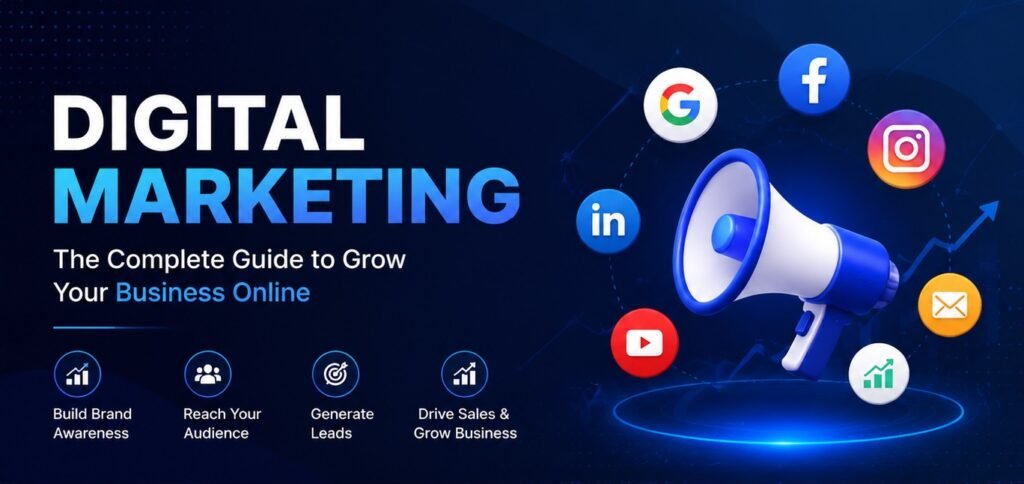
Digital marketing refers to all marketing efforts that occur online or through digital technologies to promote products, services or brands. It helps businesses connect with audiences where they spend most of their time — on the internet — whether through social media, search engines, email, mobile apps or websites.
In simpler words, digital marketing is using digital channels to attract, engage and convert customers in measurable and meaningful ways.
Why Digital Marketing Matters
Nearly every consumer today begins their buying journey online. Businesses that don’t use digital marketing often miss out on reach, visibility, and growth opportunities.
✔ It increases brand awareness
✔ It targets specific audiences
✔ It’s measurable and data‑driven
✔ It drives sales and conversions
According to industry insights, digital or internet marketing accounts for more than half of modern marketing spend — and that number is growing.
Core Types of Digital Marketing
Here’s a semantic view of key digital marketing areas — from basic to advanced:
🔹 Search Engine Optimization (SEO)
Improves organic visibility on search engines like Google. It includes keyword research, on‑page SEO, link building, page speed, mobile optimization and more.
🔹 Content Marketing
Creating valuable, relevant content — blog posts, guides, videos and FAQs — to attract and retain audiences.
🔹 Social Media Marketing
Using platforms like Instagram, Facebook, LinkedIn, and TikTok to build communities and drive engagement.
🔹 Paid Advertising (PPC)
Ads on platforms like Google Ads or Meta/Instagram that deliver traffic instantly through paid placements.
🔹 Email Marketing
Communicating directly with an audience through emails to nurture leads and increase conversions.
🔹 Influencer Marketing
Partnering with influential creators to expand reach and build trust via social proof.
Digital Marketing Benefits
| Benefit | What It Means |
|---|---|
| Reach | Connect with users globally, 24/7 |
| Targeting | Ads and content shown to your ideal audience |
| Engagement | Increased interaction with your brand |
| Conversion | Turn visitors into customers or leads |
| Insights | Data & analytics inform decisions |
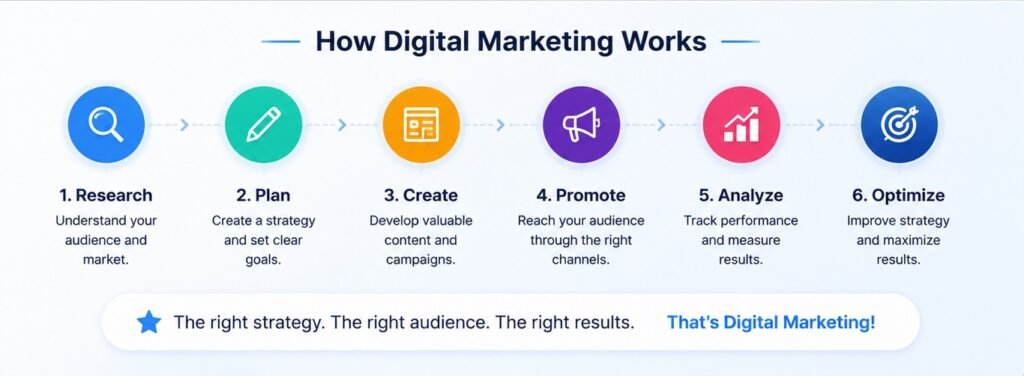
How Digital Marketing Works — Step By Step
1. Define Your Goals
Are you looking to increase brand awareness, drive leads, get sales or build a community?
2. Know Your Audience
Understanding your customer’s needs, preferences and online behavior is crucial.
3. Choose the Right Channels
Not every business needs every channel. Pick what aligns with your goals.
4. Create Valuable Content
High‑quality content builds authority, trust and relevance.
5. Measure & Optimize
Use analytics (like Google Analytics) to track performance and adapt strategies.
Common Digital Marketing FAQs
Q1: What’s the difference between digital marketing and traditional marketing?
Digital marketing uses online channels (search, social media, web).
Traditional marketing uses offline methods (TV, radio, print).
Digital allows more precise targeting and measurable results.
Q2: How much does digital marketing cost?
Costs vary. SEO requires time and expertise, while paid ads are budget‑dependent. Small businesses can start with low budgets and scale.
Q3: What is search intent?
Search intent is the purpose behind a user’s search query. Content must match this intent to rank well. (People may want to learn, compare or buy.)
Q4: What tools help digital marketing?
Popular tools include:
- Google Analytics
- Google Search Console
- SEMrush, Ahrefs
- Meta/Instagram Insights
- Email platforms (Mailchimp, Klaviyo)
Q5: How long does digital marketing take to show results?
It depends on strategy. SEO and content marketing may take weeks to months. Paid advertising can deliver results instantly.
Advanced Strategies — Scaling Your Digital Marketing
🔹 Marketing Automation
Automate repetitive tasks like email sequences, lead scoring and CRM workflows.
🔹 Conversion Optimization (CRO)
Improve your website or landing page to increase the number of visitors who take action.
🔹 Retargeting & Remarketing
Show ads to users who’ve already visited your site or engaged with your content.
🔹 Data‑Driven Personalization
Use analytics to tailor content and offers for different audience segments.
Semantic SEO & Digital Marketing
Search engines today focus on context and user intent, not just exact keywords. This means your digital marketing content should:
✔ Cover complete topics and FAQs
✔ Use related semantic terms (e.g., online advertising, social media strategy, content plan)
✔ Be contextually structured to answer what users mean, not just what they type
Semantic SEO helps your content rank for multiple related search queries by covering broader, in‑depth topics.
Digital Marketing Metrics You Should Track
| Metric | Why It Matters |
|---|---|
| Impressions | How many people see your content |
| Clicks/CTR | Engagement level |
| Bounce Rate | Content relevance |
| Conversions | Goals achieved |
| ROI | Return on marketing spend |
Final Tips for Success
- Keep content helpful and user‑centered — always answer your audience’s questions.
- Use structured headings, bullets, and FAQs to help search engines understand your content.
- Combine channels for maximum impact — email + social + SEO = growth.
Conclusion
Digital marketing is no longer optional — it’s essential for modern businesses. By understanding core strategies, tracking metrics, and optimizing for real human needs (and search intent), your brand can grow visibility, engagement, and conversions online.
Advanced FAQs
Q: What is 360° digital marketing?
A 360° approach uses integrated digital strategies across channels for consistent messaging and maximum impact.
Q: What is digital marketing transformation?
It’s transitioning a business to modern digital processes — including data tracking, digital campaigns, automation and analytics.