By Digital’s Cafe
Introduction
In today’s competitive digital world, ranking on Google is no longer about publishing random content or building basic backlinks. Search engines have become smarter. They now understand meaning, context, entities, and relationships between websites.
This is where a powerful SEO strategy comes in — External Semantic Topical Mapping.
At Digital’s Cafe, we use this strategy to help brands build strong online authority by creating a connected ecosystem of content across multiple platforms, not just their own website.
In this guide, you will learn exactly how to build an external semantic topical map step by step, how it works, and why it is becoming essential for SEO success in 2027.
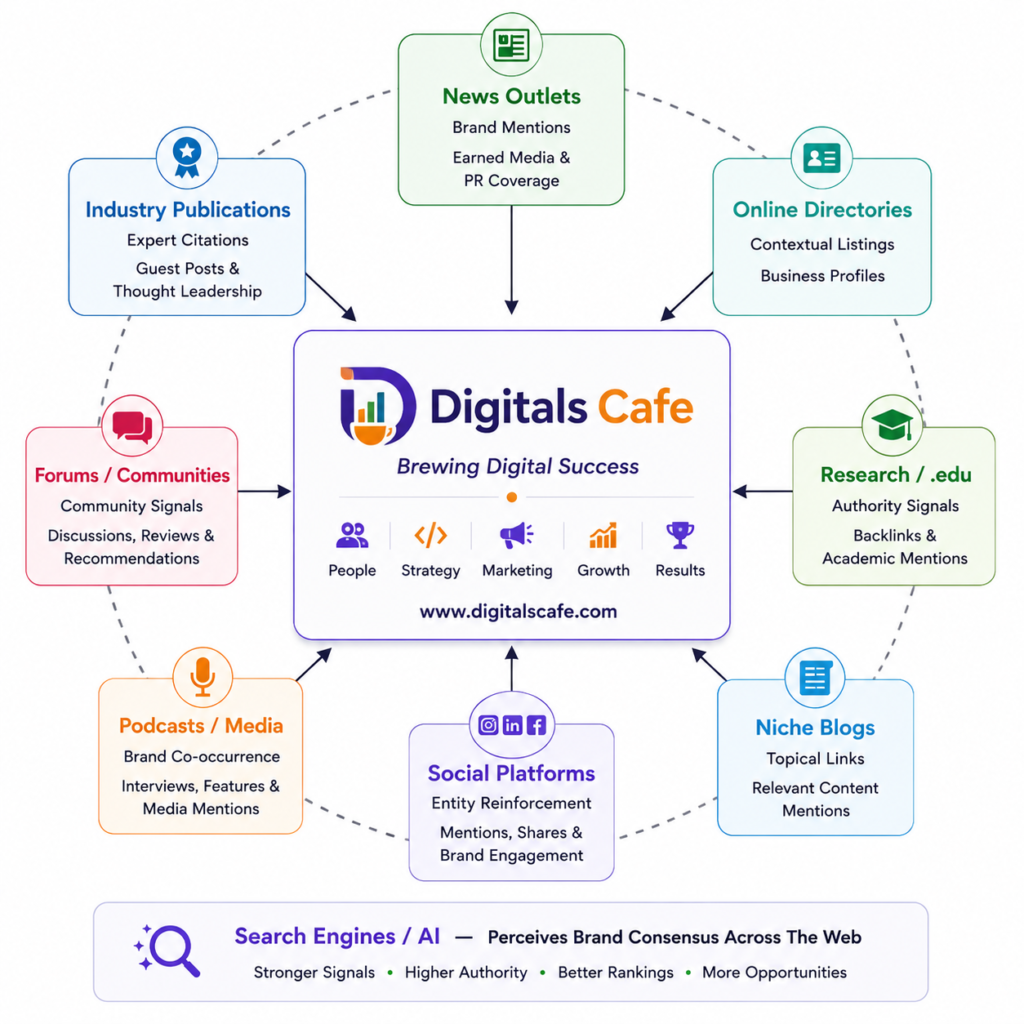
What is an External Semantic Topical Map?
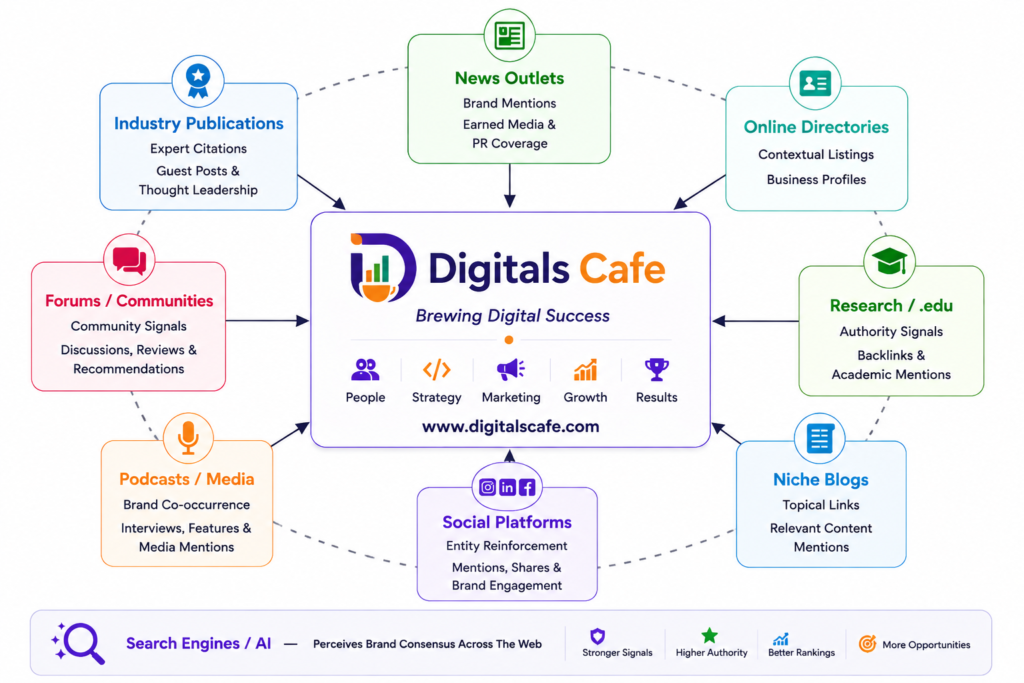
An external semantic topical map is an SEO strategy where you build a network of related content across third-party websites, blogs, directories, forums, and media platforms.
Instead of relying only on your website, you expand your digital presence by publishing and connecting content across the web.
These external signals help search engines understand:
- What your brand is about
- How strong your authority is
- How your content is connected across the internet
- Whether your brand is trustworthy and relevant
In simple words, it creates a digital footprint of your brand across multiple platforms, improving visibility and rankings.
Why External Topical Maps Are Important for SEO
Modern SEO is no longer just about keywords. It is about trust and context.
Search engines like Google and AI systems now prioritize:
- Brand mentions across the web
- Contextual relevance between topics
- Entity-based understanding
- Authority signals from external websites
Here’s why this strategy matters:
1. Builds Strong Brand Authority
When your brand appears on multiple trusted platforms, Google sees it as more credible.
2. Improves Search Rankings
External signals strengthen your ability to rank for competitive keywords.
3. Enhances Entity Recognition
Google understands your brand as an “entity” connected to specific topics.
4. Boosts AI Search Visibility
AI systems prefer brands with strong cross-platform presence.
Step-by-Step Guide to Creating an External Semantic Topical Map
Step 1: Define Your Core Entity and Goal
Every strategy starts with clarity.
Your “core entity” is your brand — for example:
👉 Digital’s Cafe (Digital Marketing Agency)
Now define your goals:
- SEO traffic growth
- Lead generation
- Brand awareness
- Service visibility
Also identify your core services:
- SEO
- Web development
- Social media marketing
- Branding
- Paid ads
This helps you build a focused content ecosystem.
Step 2: Find High-Quality External Platforms
Not every website is useful for SEO.
You should focus on platforms that already have authority and indexing power.
Best platforms include:
- News websites
- Industry blogs
- Business directories
- Medium, LinkedIn articles
- Quora & Reddit discussions
- Guest posting websites
Avoid:
- Spam websites
- Low-quality backlinks
- Irrelevant niches
👉 Quality matters more than quantity.
Step 3: Create Semantic Bridge Topics
This is the most important part of the strategy.
You must connect topics logically across different platforms.
Example for Digital’s Cafe:
Core Topic: Digital Marketing
Supporting Topics:
- SEO strategies
- Content marketing
- Branding
- Website development
- Social media growth
- Lead generation
Now distribute these topics:
- Blog 1 → SEO guide on external site
- Blog 2 → Branding strategy article
- Forum post → “How to increase traffic”
- Medium article → “Content marketing trends”
Each piece supports the same main entity: Digital’s Cafe
Step 4: Create and Distribute Content
Now you publish content strategically across platforms.
Core Content (Your Website)
- Pillar blogs
- Service pages
- Detailed guides
External Content (Other Platforms)
- Guest posts
- PR articles
- Industry blogs
- Social media content
Supporting Content
- Case studies
- Comparisons
- Listicles
- How-to articles
👉 Focus on relevance, not just posting everywhere.
Step 5: Connect the External Network
Now you build relationships between content pieces.
- Link related articles together
- Mention your brand consistently
- Reference external sources when relevant
- Maintain topic continuity
This creates a semantic web of content, which search engines interpret as authority.
Step 6: Strengthen Brand Mentions (Entity SEO)
Search engines track more than backlinks.
They track:
- Brand mentions
- Co-occurring keywords
- Contextual signals
Even without links, repeated brand mentions like Digital’s Cafe help build authority.
Consistency is key.
Step 7: Monitor and Expand
SEO is not a one-time task.
You must:
- Track rankings
- Monitor traffic
- Analyze backlinks
- Expand topics gradually
Over time, your topical map becomes stronger and more authoritative.
Common Mistakes to Avoid
- Posting on irrelevant websites
- Buying spam backlinks
- Ignoring content quality
- Not maintaining consistency
- Over-optimizing anchor text
FAQs
Q1: What is an external semantic topical map in SEO?
It is a strategy where content is distributed across external websites to build authority and improve search visibility.
Q2: Does this improve Google rankings?
Yes. It increases authority, relevance, and entity recognition, which improves rankings.
Q3: Is backlinking still important?
Yes, but context, relevance, and brand mentions are now equally important.
Q4: How long does it take to see results?
Typically 2–6 months depending on competition and consistency.
Q5: Can small businesses use this strategy?
Yes. In fact, it is very powerful for startups and agencies like Digital’s Cafe to grow faster.
Conclusion
An External Semantic Topical Map is one of the most powerful SEO strategies in 2027.
It allows your brand to:
- Build authority across the web
- Improve search rankings
- Increase trust signals
- Strengthen entity recognition
At Digital’s Cafe, we believe SEO is no longer about isolated pages — it is about building a complete digital ecosystem around your brand.
Need SEO Growth for Your Business?
Let Digital’s Cafe help you build a powerful SEO system that ranks and converts.
📞 +92-321-0001207
🌐 www.digitalscafe.com